
 1 month ago
53
1 month ago
53
Black garlic looks strange the first time you see it. Indeed, the cloves are jet black, soft, and slightly sticky. So what is black garlic? It is ordinary garlic, slowly aged into something new. In Japanese, people call it kuro ninniku.
The harsh bite of raw garlic is gone entirely. Instead, a sweet, tangy, deeply savory flavor takes over. In fact, many compare the taste to balsamic vinegar or dried fruit. It has become a favorite in fine dining and home kitchens alike.
Moreover, it is prized as a health food across East Asia. This guide explains what black garlic is and how it is made. We will explore its flavor, its history, and its possible benefits. By the end, you may want to try a clove for yourself.
TOC
Quick Facts About Black Garlic
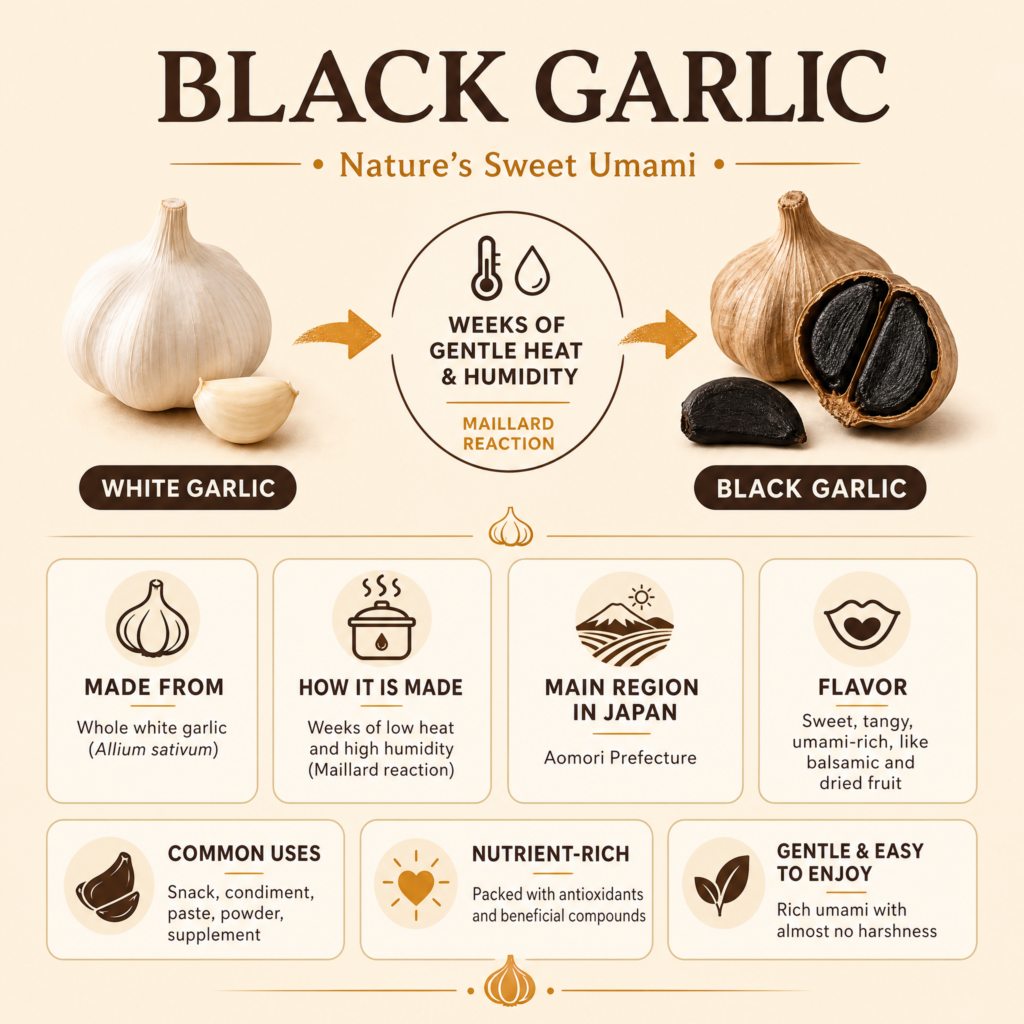
| Japanese Name | 黒にんにく (kuro ninniku) |
| English Name | Black garlic (aged garlic) |
| Made From | Whole white garlic (Allium sativum) |
| How It Is Made | Weeks of low heat and high humidity (Maillard reaction) |
| Main Region in Japan | Aomori Prefecture |
| Flavor | Sweet, tangy, umami-rich, like balsamic and dried fruit |
| Common Uses | Snack, condiment, paste, powder, supplement |
Black garlic starts as regular white garlic. Then weeks of gentle heat and humidity transform it completely. The cloves turn black, soft, and sweet. Notably, Japan produces much of its finest black garlic in Aomori. People eat it as a snack, a condiment, and a supplement. Above all, it offers rich umami with almost no harshness.
What Is Black Garlic?
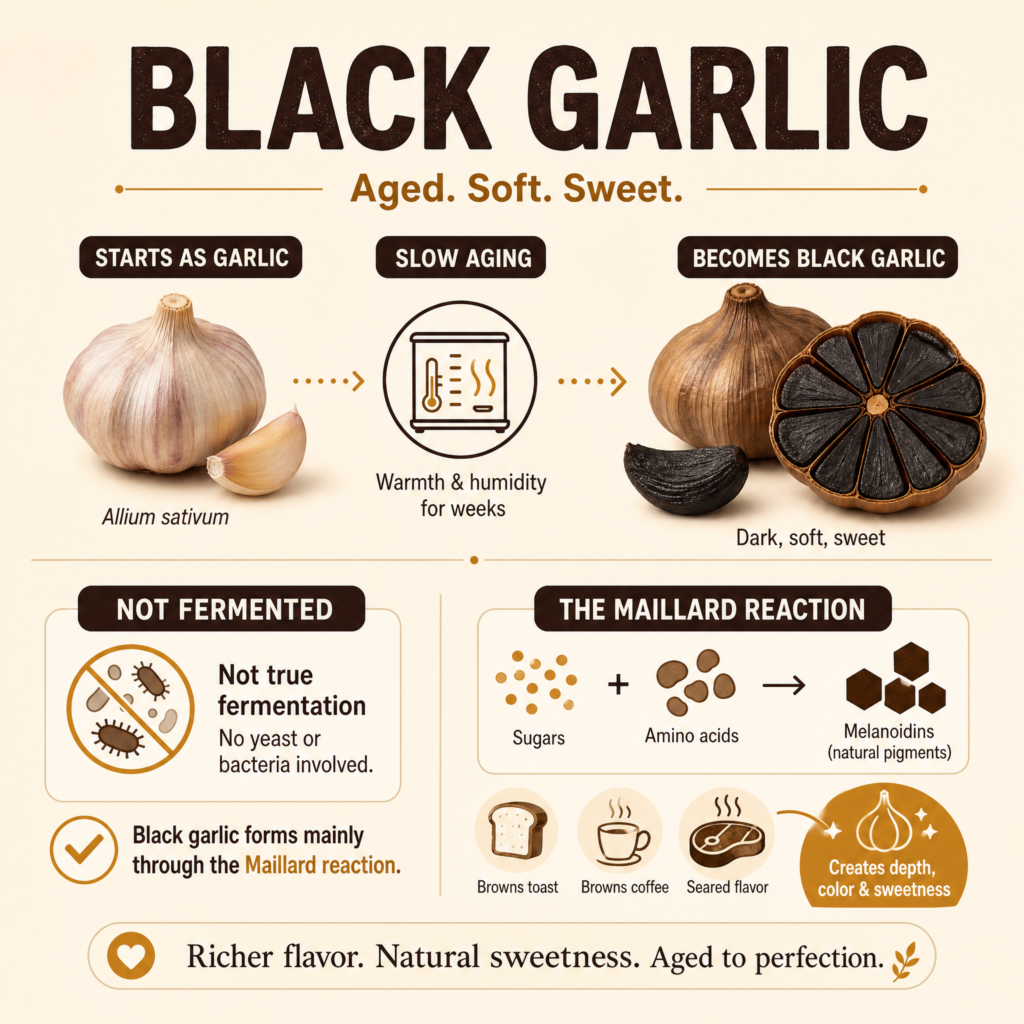
Black garlic is simply aged garlic. It comes from the same plant as regular garlic, Allium sativum. The difference lies entirely in how producers treat it. Specifically, whole bulbs rest in warm, humid conditions for weeks. Over time, they darken, soften, and grow sweet.
People often call black garlic a fermented food. However, that word is not quite accurate. After all, true fermentation relies on microbes like yeast or bacteria. Black garlic forms mainly through the Maillard reaction instead. This is a slow chemical browning, not microbial fermentation.
A Quick Word on the Science
The Maillard reaction is worth understanding here. Specifically, it happens when sugars and amino acids meet gentle heat. For example, the same reaction browns toast, coffee, and seared meat. In garlic, it creates dark pigments called melanoidins. Those pigments give black garlic its color and depth.
How It Is Made
The process sounds simple, yet it takes real patience. First, whole garlic bulbs enter a warm, humid space. There they rest, untouched, for several weeks. They add no seasoning, no additives, and nothing else. Only heat, moisture, and time do the work.
Heat, Humidity, and Time
The conditions must stay carefully controlled. Typically, producers hold the garlic between 60 and 80 degrees Celsius. Humidity usually sits around 70 to 90 percent. The aging runs from about two weeks to over a month. Many aim for roughly three to four weeks as the sweet spot.
Something remarkable happens during this time. Meanwhile, the sharp compound allicin slowly breaks down. That is why the pungent smell fades away. Meanwhile, sugars and amino acids react and deepen. In the end, the result is sweetness, softness, and dark color.
Making It at Home
You can even make black garlic at home. For example, many people use a rice cooker on its warm setting. The cooker holds a steady low heat for days. Alternatively, others buy a dedicated fermenter. Be warned, though, the smell can fill a whole house.
So most home cooks keep the cooker outside or in a garage. Still, patience is truly the hardest ingredient here. The bulbs need ten days or more to transform. You simply wait and let the heat do its job. Finally, the reward is a batch of sweet, sticky cloves.
What Does It Taste Like?
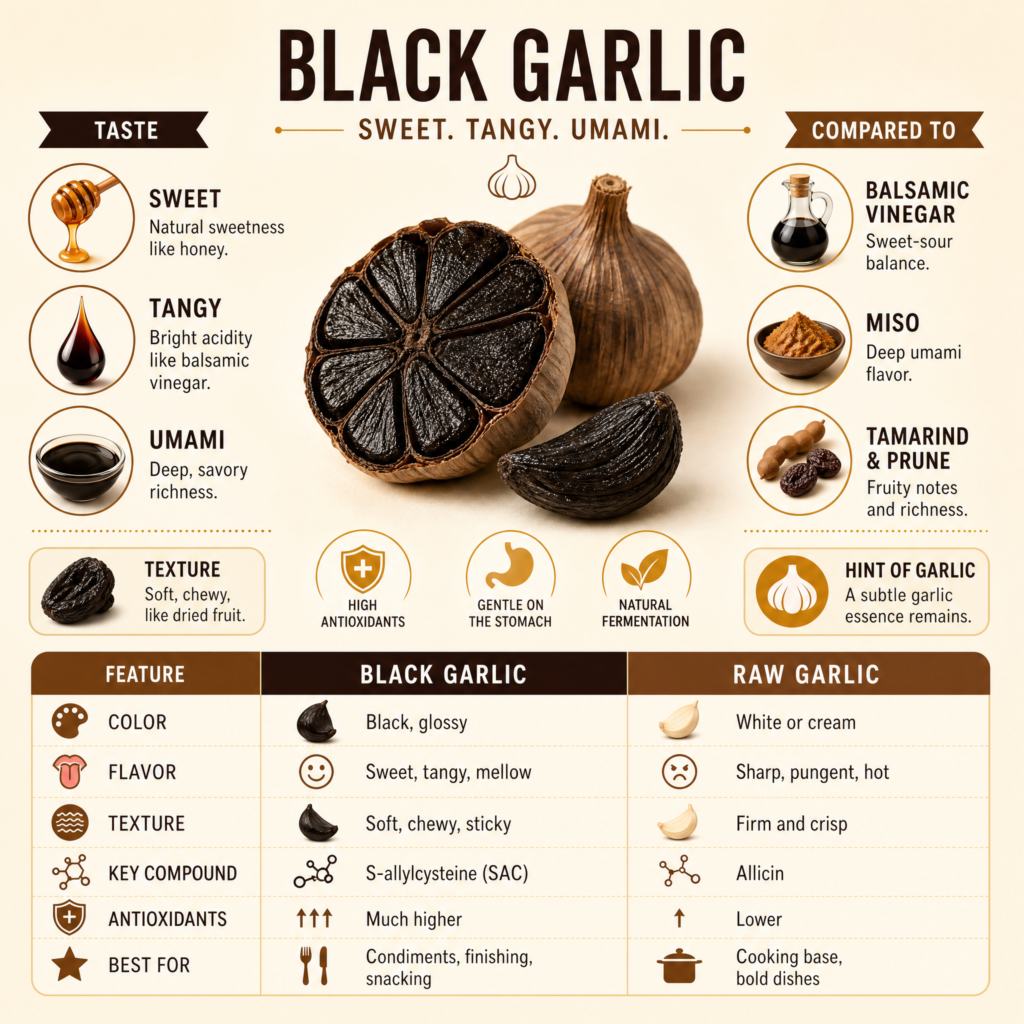
This is where black garlic really wins people over. Indeed, the flavor is nothing like raw garlic. There is no burning bite and no sharp aftertaste. Instead, you get something sweet, tangy, and mellow.
Many tasters reach for the same comparisons. Black garlic tastes a little like balsamic vinegar. Meanwhile, others sense notes of tamarind, molasses, or prune. A gentle savory depth, or umami, ties it all together. Notably, the texture is soft and chewy, like a dried fruit.
How It Compares to Other Foods
It helps to place black garlic beside familiar flavors. For instance, its sweet-sour balance recalls aged balsamic vinegar. Its deep umami echoes fermented foods like miso. Yet it keeps a faint, pleasant hint of garlic underneath. That mix is what makes it so hard to forget.
| Color | Black, glossy | White or cream |
| Flavor | Sweet, tangy, mellow | Sharp, pungent, hot |
| Texture | Soft, chewy, sticky | Firm and crisp |
| Key compound | S-allylcysteine (SAC) | Allicin |
| Antioxidants | Much higher | Lower |
| Best for | Condiments, finishing, snacking | Cooking base, bold dishes |
The History of Black Garlic
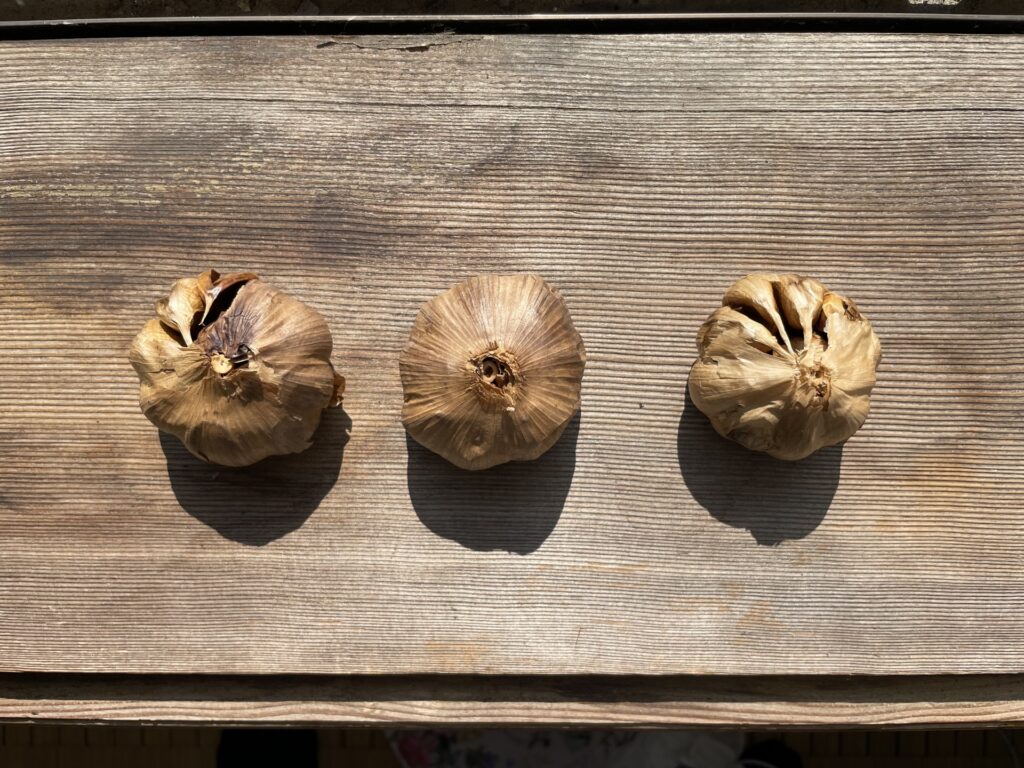
Black garlic feels modern, yet its roots run deep. Indeed, the exact origins remain honestly a bit murky. For example, some sources trace it to Korea centuries ago. Others point to a longer East Asian tradition of aged garlic. Indeed, people valued it as a folk remedy long before science looked closer.
From Folk Remedy to Modern Food
Historically, families treated aged garlic as medicine. Families believed it boosted strength and health. In Japan, however, the modern story took shape more recently. One popular account credits a producer in Mie Prefecture around 1999. From there, interest slowly began to spread.
Aomori and the Rise of Kuro Ninniku
Aomori Prefecture soon became the heart of black garlic. Notably, this cold northern region already grew superb garlic. It produces roughly 70 percent of Japan’s garlic today. Notably, its Fukuchi White variety suits aging beautifully.
Then local development took off after 2004. Research to refine the method continued from 2006 onward. Producers formed an Aomori black garlic association in 2008. Today, the region exports kuro ninniku around the world. A cold-climate garlic had found a global audience.
Black Garlic Health Benefits
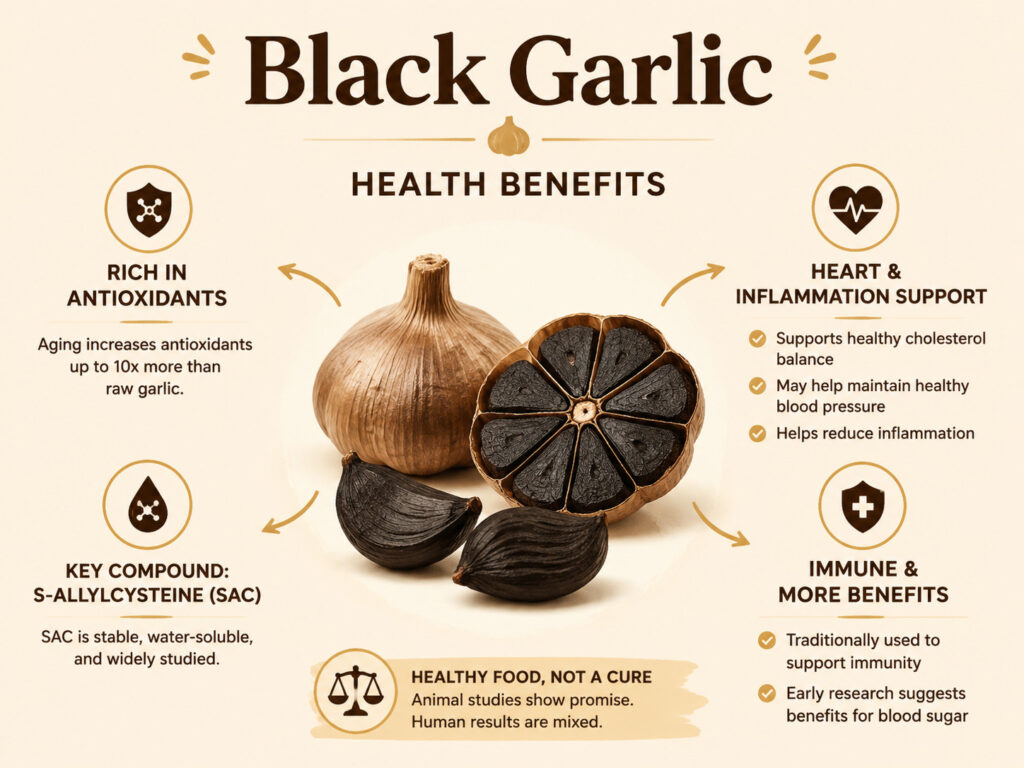
Black garlic has a strong reputation as a health food. Above all, that reputation rests on its antioxidants. Aging appears to boost these protective compounds. Still, it helps to look at the evidence honestly.
Antioxidants and Key Compounds
Aging changes the chemistry of garlic in useful ways. Notably, black garlic holds far more antioxidants than raw garlic. In fact, one study measured a tenfold jump after three weeks. A compound called S-allylcysteine, or SAC, rises sharply too. Notably, SAC is stable, water-soluble, and widely studied.
Heart Health and Inflammation
Researchers have looked closely at the heart. Black garlic may support heart health in several ways. For instance, some studies link it to better cholesterol balance. Others suggest mild benefits for blood pressure. Its compounds may also help calm inflammation.
Here honesty matters, though. For instance, animal studies often show clear, promising results. Human trials stay smaller and more mixed. Indeed, some find real gains, while others show little change. So black garlic is a healthy food, not a cure.
Immune Support and More
Traditional use also points to immune support. Historically, people ate garlic to fight off illness. It keeps many of those helpful compounds. Interestingly, early research even hints at benefits for blood sugar. Yet more human studies are still needed here.
Black Garlic vs Raw Garlic
People often ask how black garlic compares to raw. Indeed, the two differ in taste, texture, and chemistry. Neither is simply better than the other. Each suits different dishes and different goals.
For one thing, raw garlic is sharp, pungent, and bracing. It is rich in allicin, the source of its bite. It trades that bite for sweetness and depth. Meanwhile, it gains antioxidants like SAC in the process. So the choice depends on what you want from it.
How to Use Black Garlic in Cooking

It is wonderfully easy to enjoy. In fact, you can eat a clove straight from the peel. Many people treat it as a healthy little snack. In the kitchen, it works as a finishing touch.
Everyday Ideas
Start simple to get to know the flavor. For example, spread the soft cloves onto warm toast or bread. Whisk black garlic into a balsamic dressing. Stir it into sauces, marinades, soups, and stews. It also shines among Japanese condiments and flavor accents.
- Snack: peel a clove and eat it on its own.
- Dressing: blend it into a balsamic vinaigrette.
- Sauce: mash it into pasta sauces or gravies.
- Marinade: mix it with soy sauce for meat or fish.
- Spread: smear the soft cloves onto warm bread.
Gourmet and Surprising Uses
Fine dining chefs adore black garlic. Specifically, they fold it into rich meat dishes and sauces. It pairs beautifully with beef, fish, and roasted vegetables. Some daring cooks even add it to chocolate and ice cream. That sweet, savory depth can surprise you in dessert.
A word of advice from experience helps here. It has a bold, concentrated flavor. So a little goes a very long way. Use it as a central accent, not a background note. Too much can easily overwhelm a delicate dish.
Forms You Can Buy
It comes in several handy forms. Typically, whole bulbs are the most common and photogenic. Meanwhile, peeled cloves offer quick, easy convenience. There are also pastes, powders, and supplements.
Each form suits a different need. For example, whole bulbs feel special and look striking. For example, paste blends smoothly into sauces and spreads. Powder works well as a seasoning or in capsules. Supplements appeal to those chasing the health benefits.
Final Thoughts
Black garlic is a small marvel of patience. Indeed, time and gentle heat turn a sharp bulb into something sweet. Indeed, its flavor is complex, mellow, and full of umami. Its story stretches from old folk remedies to modern kitchens. The possible health benefits are a welcome bonus.
For me, the real joy is simply the taste. Honestly, that first sweet, sticky clove is a genuine surprise. Honestly, it tastes nothing like the garlic you know. So if you spot some, give it a try. You may find a new favorite hiding in those black cloves.
Black Garlic FAQ
What is black garlic?
Black garlic is regular garlic that has been aged for weeks. Gentle heat and humidity turn it black, soft, and sweet. The change comes mainly from the Maillard reaction, not microbes. It tastes mellow and savory, unlike raw garlic.
Is black garlic fermented?
People often call it fermented, but that is not quite right. True fermentation needs microbes like yeast or bacteria. Black garlic forms mostly through the Maillard reaction. That is a slow chemical browning driven by heat.
What does black garlic taste like?
Black garlic tastes sweet, tangy, and rich in umami. Many compare it to balsamic vinegar or dried fruit. Notes of tamarind and molasses often appear too. The sharp bite of raw garlic is completely gone.
How is black garlic made?
Whole garlic bulbs rest in a warm, humid space. Producers hold them around 60 to 80 degrees Celsius. The aging lasts from about two weeks to over a month. Only heat, moisture, and time are involved.
Can I make black garlic at home?
Yes, many people make it with a rice cooker. The warm setting holds a steady low heat for days. A dedicated fermenter also works well. Be warned that the smell can fill your home.
Is black garlic good for you?
Black garlic is rich in antioxidants and may support health. Studies link it to better cholesterol and lower inflammation. However, human trials are small and results are mixed. It is a healthy food, not a cure.
What is the difference between black garlic and raw garlic?
Raw garlic is sharp and pungent, thanks to allicin. Black garlic is sweet, soft, and mellow instead. Aging raises its antioxidants and a compound called SAC. The two suit very different dishes.
How do you use black garlic in cooking?
You can eat black garlic straight or use it as a condiment. Spread it on bread or whisk it into dressings. It also enriches sauces, marinades, and stews. A little goes a long way, so use it sparingly.
Where does black garlic come from?
The origins are unclear, but East Asia aged garlic long ago. Some trace black garlic to Korea centuries back. In Japan, it spread from around 1999 onward. Aomori Prefecture is now its main home.
How should I store black garlic?
Keep black garlic in a cool, dry place away from sunlight. Refrigerate it after opening for the best quality. Sealed properly, it can last for months. The aging process already helps preserve it.
Does black garlic smell strong?
Fresh cloves have a mild, sweet aroma. It lacks the harsh punch of raw garlic. Any garlic breath fades quickly after eating. That mildness is part of its appeal.
References
- Japan GI (Geographical Indication) Registration – on Aomori Kuro Ninniku, the Fukuchi White variety, and Aomori producing about 70% of Japan’s garlic. (Surveyed: July 2026)
- WebMD – on how black garlic is made through the Maillard reaction and its S-allylcysteine content. (Surveyed: July 2026)
- Healthline – on black garlic antioxidants and human trials on cholesterol and heart markers (12 weeks, 6 g). (Surveyed: July 2026)
- ScienceDirect (Journal of Functional Foods, 2016) – on an aged black garlic extract enriched in S-allylcysteine and polyphenols with cardioprotective effects. (Surveyed: July 2026)
- Cleveland Clinic – on black garlic containing two to three times more antioxidants than raw garlic. (Surveyed: July 2026)
Related Articles
- Yakumi (Japanese Condiments and Flavor Accents) (Surveyed: July 2026)
- The Miso Fermentation Process (Surveyed: July 2026)





 English (US) ·