
 1 month ago
60
1 month ago
60
Japanese street food is an experience you’ll never forget. The smell hits you first. Grilled chicken, sweet soy glaze, something sizzling on a hot iron plate. You’re at a matsuri, and the yatai stalls stretch as far as you can see.
This guide covers the 10 must-try Japanese street food snacks, where to find them, and what to expect when you show up hungry.
TOC
Yatai Culture: The Heart of Japanese Street Food
In many countries, street food is an everyday affair. Japan works a little differently. The heart of Japanese street food culture is the yatai — a portable food stall that appears at festivals, temple fairs, and seasonal markets.
These stalls come alive at matsuri (festivals), hanami (cherry blossom viewing), and summer fireworks events. The atmosphere is electric. Lanterns glow overhead. Crowds shuffle between stalls clutching paper cups and skewers.
Yatai also pop up in certain cities year-round. Fukuoka is famous for its open-air ramen yatai lining the riverbank. Osaka’s Dotonbori district is practically a permanent street food festival. But in many smaller cities, yatai are a seasonal treat tied to local events.
The point is: timing matters. If you’re visiting Japan and want the full yatai experience, check local festival calendars in advance. Summer and autumn are peak seasons.
Top 10 Japanese Street Foods You Have to Try
Let’s get into the food. These are the dishes you’ll encounter most often at stalls — and the ones worth going out of your way to find.
1. Takoyaki (Octopus Balls)
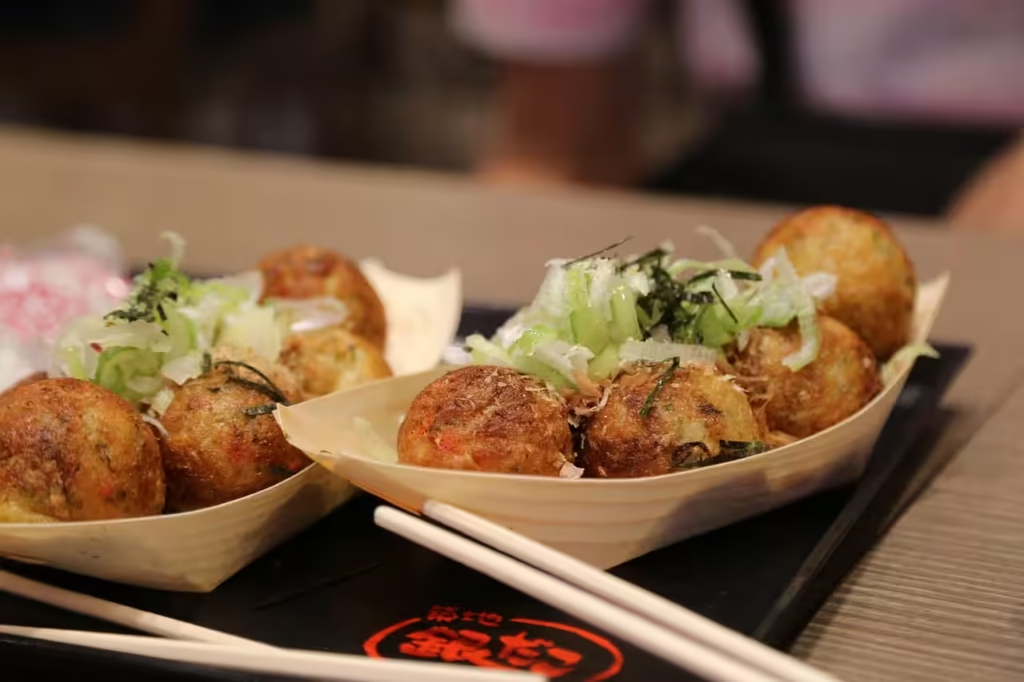 konamon – takoyaki
This is the one. Takoyaki is Osaka’s signature street snack, and it’s unlike anything else. Little round balls of batter, each hiding a piece of tender octopus inside, cooked in a special iron mold until golden and crispy on the outside.
The toppings are generous. Takoyaki sauce (sweet and savory), Japanese mayonnaise, aonori (dried green seaweed), and katsuobushi (dancing bonito flakes) all pile on top. The bonito flakes wiggle in the heat of the freshly cooked balls. It looks theatrical. It tastes incredible.
Eating takoyaki is an art. They’re dangerously hot inside. Take small bites, or you will regret it immediately.
You’ll find takoyaki everywhere in Osaka’s street food scene, from dedicated shops to festival stalls. Outside Osaka, they’re still widely available across Japan.
2. Okonomiyaki vs Monjayaki
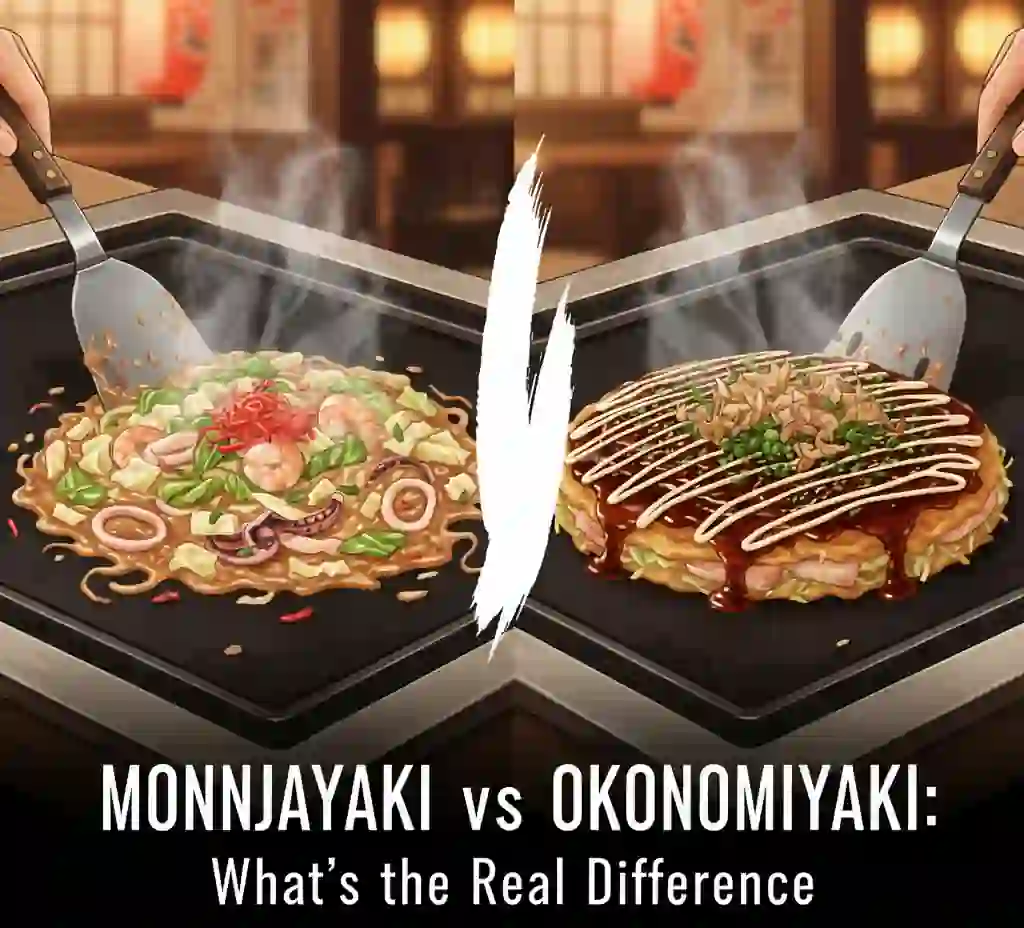 Side-by-side view of Monjayaki and Okonomiyaki being cooked on a teppan grill in Japan, highlighting their differences.
Both are savory pancakes. Both are cooked on a hot iron griddle. But they are not the same thing.
Okonomiyaki vs Monjayaki is a debate that locals take seriously. Okonomiyaki — popular in Osaka and Hiroshima — is thick, hearty, and packed with cabbage, egg, and your choice of meat or seafood. It’s topped with the same sauce-and-mayo combination as takoyaki.
Monjayaki, by contrast, is a Tokyo specialty. The batter is much thinner and almost liquid before cooking. It spreads across the griddle and forms a crispy, slightly gooey pancake that you scrape directly from the iron. It’s an acquired taste, but deeply satisfying once you’re hooked.
At festivals, you’re more likely to encounter okonomiyaki. For monjayaki, head to Tsukishima in Tokyo, where the whole street is lined with dedicated restaurants.
3. Yakitori (Grilled Chicken Skewers)
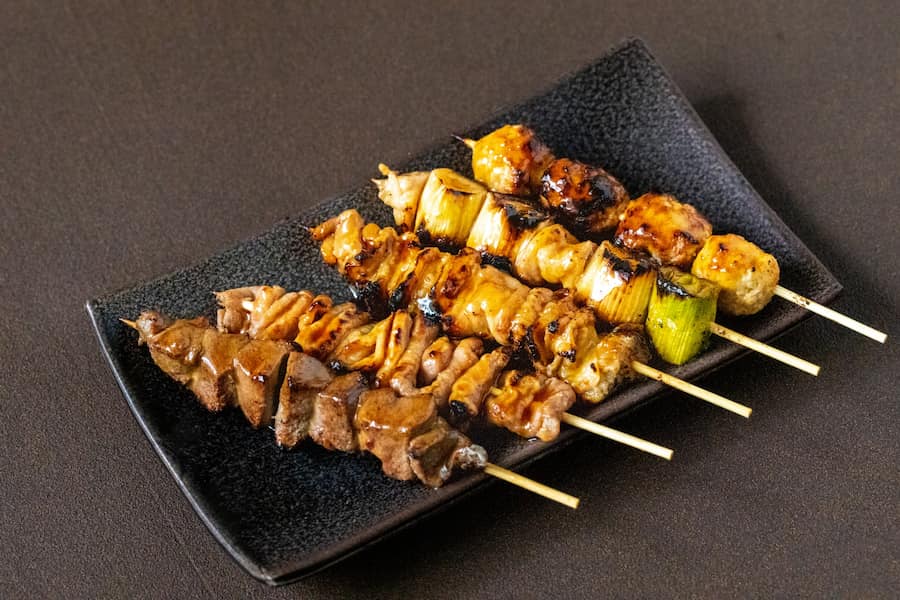 yaki tori
Few smells are more universally appealing than yakitori over charcoal. Skewers of chicken — thighs, skin, cartilage, liver, and everything in between — grilled over binchotan white charcoal with either a salty (shio) or sweet soy glaze (tare).
At yatai stalls, yakitori is simple and fast. You point, you pay, you eat standing up. Yakitori is also a staple at izakayas, but there’s something about eating it fresh off a stall grill that hits differently.
If you’re new to yakitori, start with momo (thigh) or negima (chicken and spring onion). Both are tender and beginner-friendly. Adventurous eaters should try tsukune (chicken meatball) with a dipping egg yolk.
4. Taiyaki (Fish-Shaped Cake)
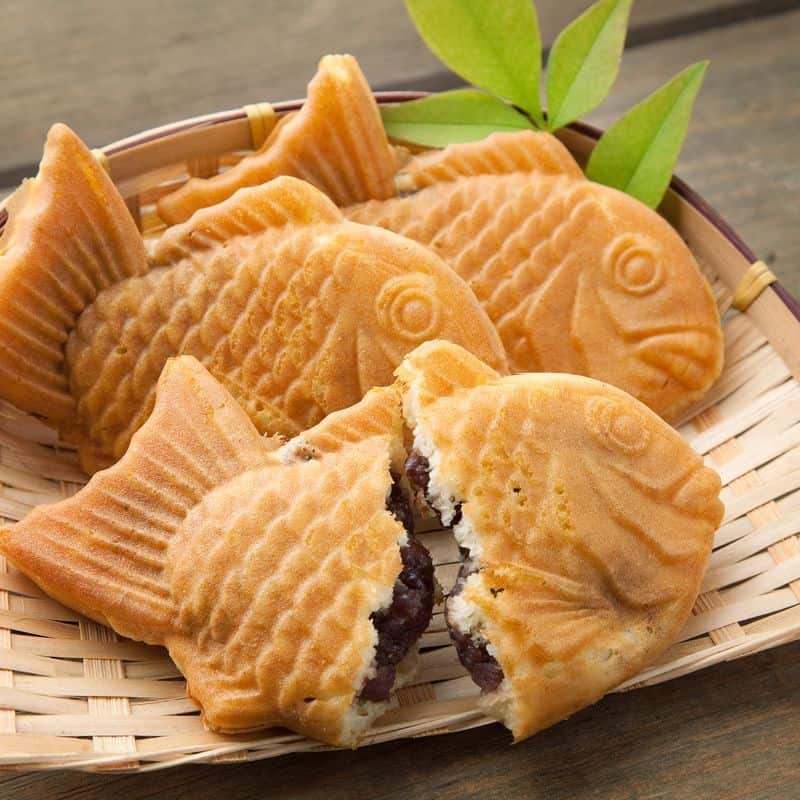 Fish-shaped taiyaki filled with sweet red bean paste, a popular traditional Japanese snack. Perfect for enjoying authentic Japanese street food.
Don’t let the fish shape fool you. Taiyaki is entirely sweet. It’s a crispy waffle-like pancake baked in a fish-shaped mold, traditionally filled with anko (sweet red bean paste).
Modern versions have expanded the fillings dramatically. Custard cream, matcha, chocolate, sweet potato — you’ll find all of these at stalls and specialty shops. The shell is thin, slightly crispy at the edges, and soft in the middle.
Taiyaki is the kind of snack that makes you feel unreasonably happy. It’s warm, sweet, and just the right size. Buy one, walk slowly, eat it while it’s still hot.
5. Yakisoba (Fried Noodles)
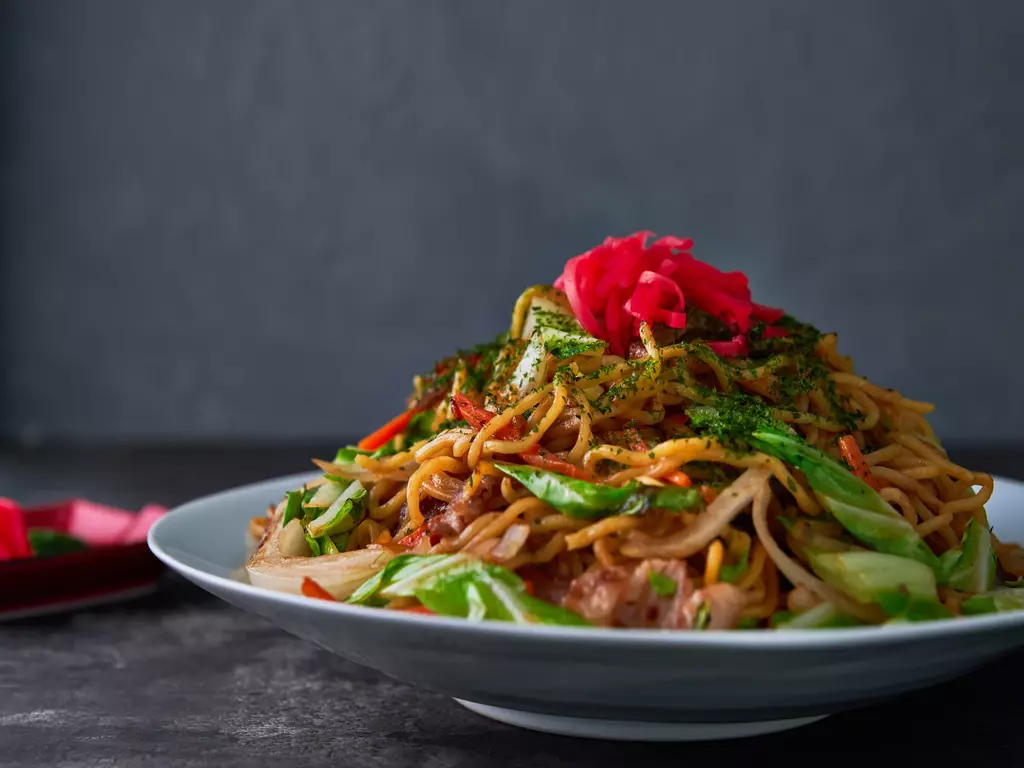
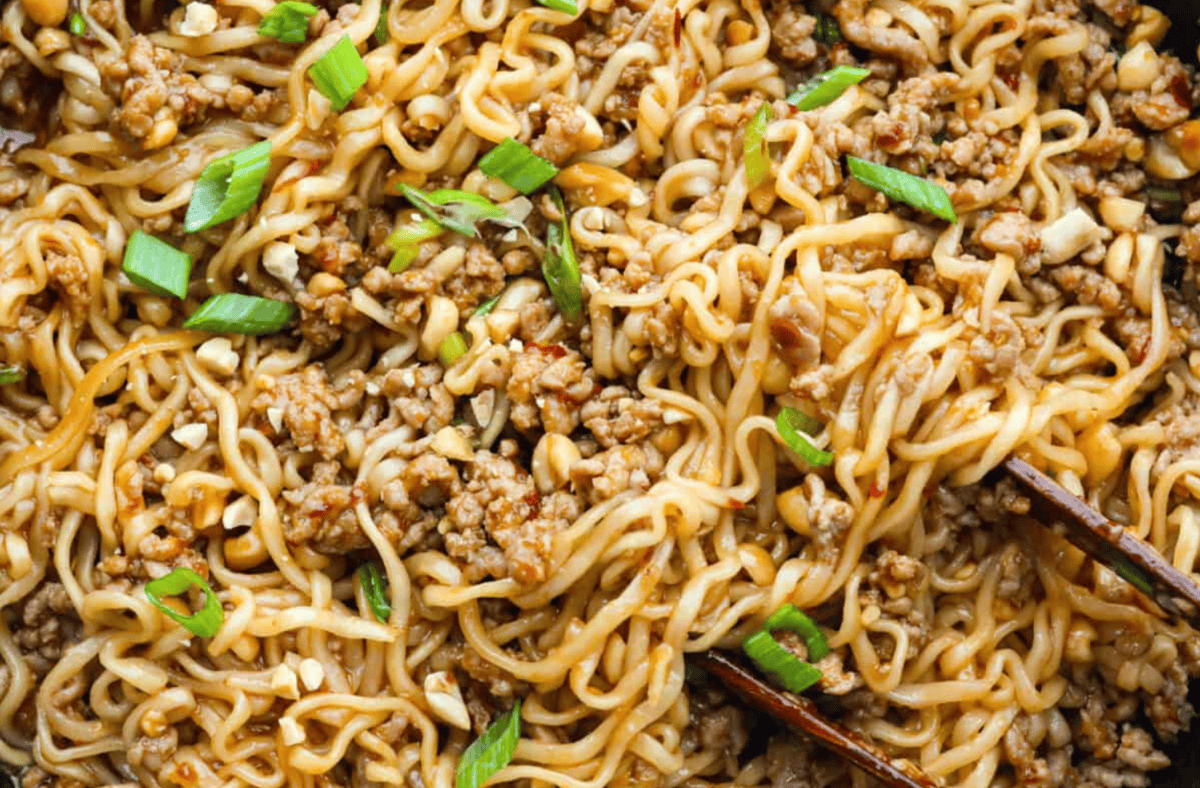
Yakisoba is one of the most comforting Japanese street food dishes you’ll find at any festival stall. Thick wheat noodles stir-fried on a large iron griddle with cabbage, pork, and a tangy Worcestershire-based sauce. Topped with aonori and pickled ginger.
It’s served on a paper tray, often with a small fork or chopsticks. The smell of yakisoba cooking is one of those festival-specific memories that stays with you long after the trip is over.
It looks simple. In the right hands, it’s genuinely great. The key is high heat and a well-seasoned griddle.
6. Dango (Rice Dumplings)
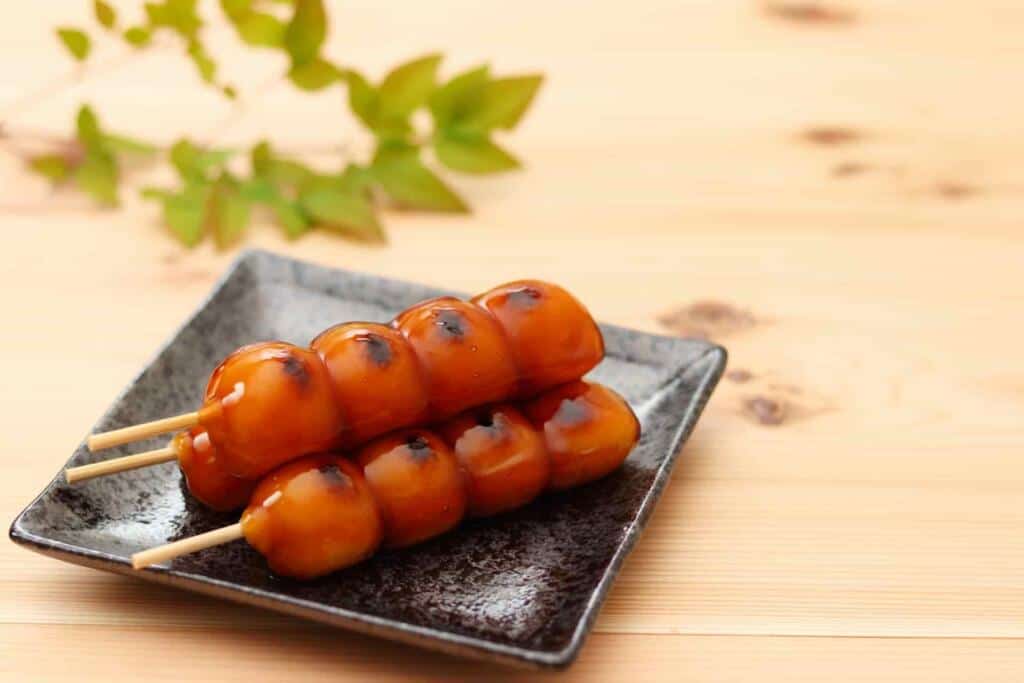 Sweet Mitarashi Dango skewers with a shiny soy glaze, a popular traditional Japanese snack enjoyed with tea.
Dango are small, chewy rice flour dumplings served on skewers, usually in groups of three to five. The most iconic variety is mitarashi dango — lightly grilled dumplings coated in a glossy sweet soy sauce glaze.
The texture is unlike anything in Western desserts. Bouncy, dense, slightly sticky. Once you like it, you really like it. The first bite might take a moment to appreciate.
Other varieties include hanami dango (three colors: pink, white, green) and sesame-coated dango. Hanami dango is sold everywhere during cherry blossom season and has become one of Japan’s most recognizable food icons.
7. Imagawayaki and Obanyaki
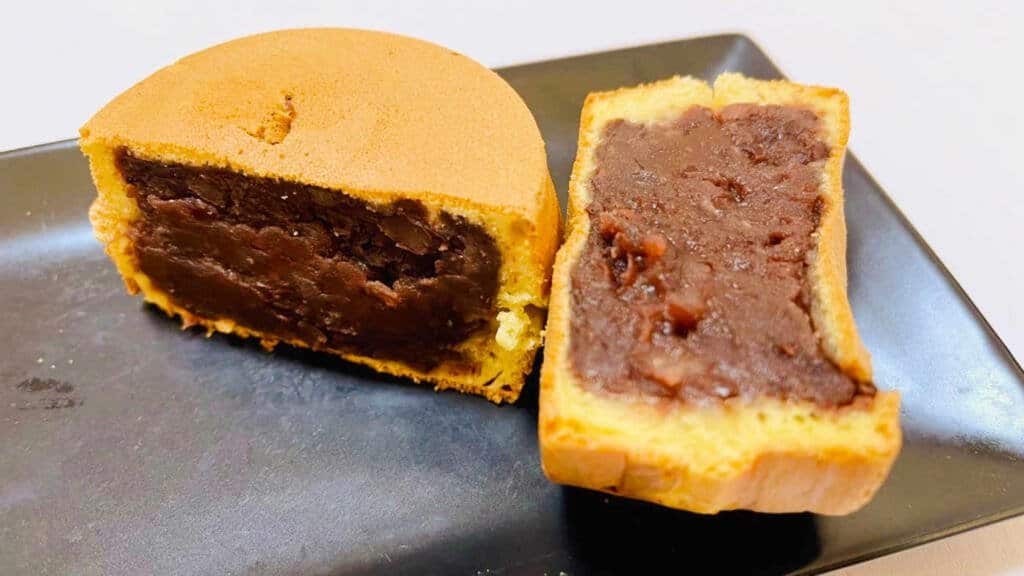 Imagawa Yaki is a Japanese confection that is popular during festivals. It’s like cake with red bean paste filling.
These are the cousins of taiyaki. Round, disc-shaped cakes filled with sweet red bean paste or custard, cooked in cast iron molds at festival stalls. They go by different names depending on the region — imagawayaki in Tokyo, obanyaki in Kansai, bandoryaki elsewhere.
They’re thicker than taiyaki and have a slightly cakey texture. Warm from the stall, they’re an excellent cold-weather snack. You’ll smell them before you see them.
8. Senbei (Rice Crackers)
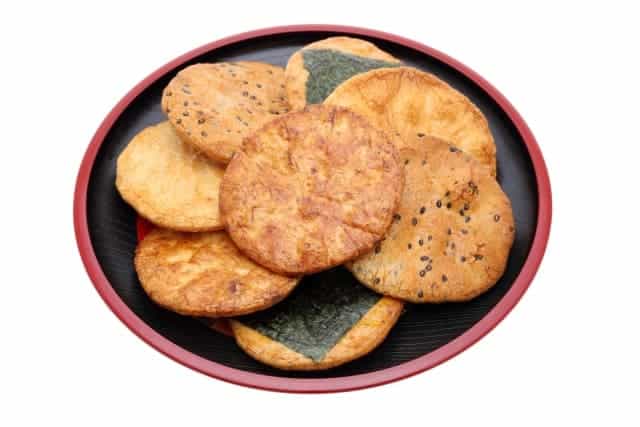 Traditional Japanese rice crackers, senbei variety served on a black and red dish, popular snack in Japan.
Senbei might seem humble compared to other Japanese street food options on this list. But a freshly grilled senbei, brushed with soy sauce right in front of you, is something special.
At festivals and temple markets, you’ll often find stalls grilling senbei on wire racks over open flames. The crackers puff up and brown in seconds. The soy sauce caramelizes slightly. You eat them hot, standing at the stall.
Flavors range from classic soy to sesame, seaweed, and spicy shrimp. They also make excellent souvenirs — widely available in packaged form at shops and airports.
9. Nikuman and Gyoza
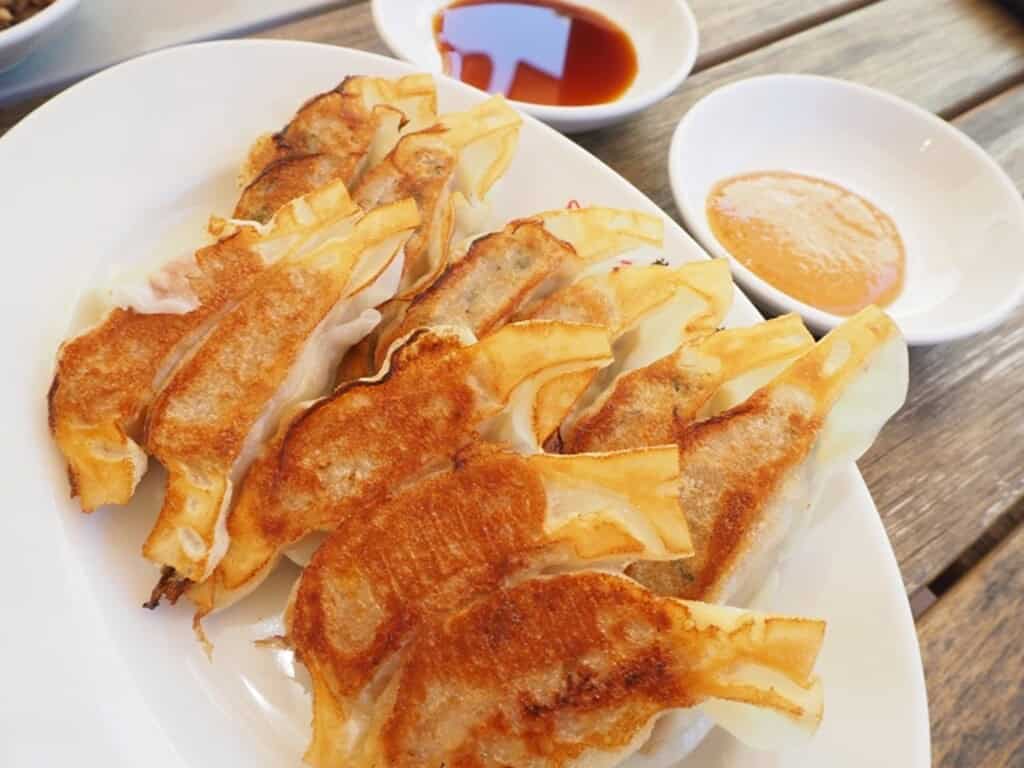 Delicious Kobe Miso Gyoza served with soy sauce and miso dipping sauce, a popular Japanese appetizer.
Nikuman are steamed buns filled with seasoned pork and vegetables. They’re a Chinese-influenced food that Japan has thoroughly adopted as its own. At convenience stores, they sit under warming lamps year-round. At festival stalls, they’re made to order and noticeably better.
The bun is soft and pillowy. The filling is savory and slightly sweet. They’re filling enough to count as a small meal.
Gyoza — pan-fried dumplings with crispy bottoms and juicy pork and cabbage filling — also appear at yatai stalls, particularly in the Kansai region. Dip them in the provided ponzu or soy sauce mixture. Don’t skip the chili oil.
10. Kakigori (Shaved Ice)
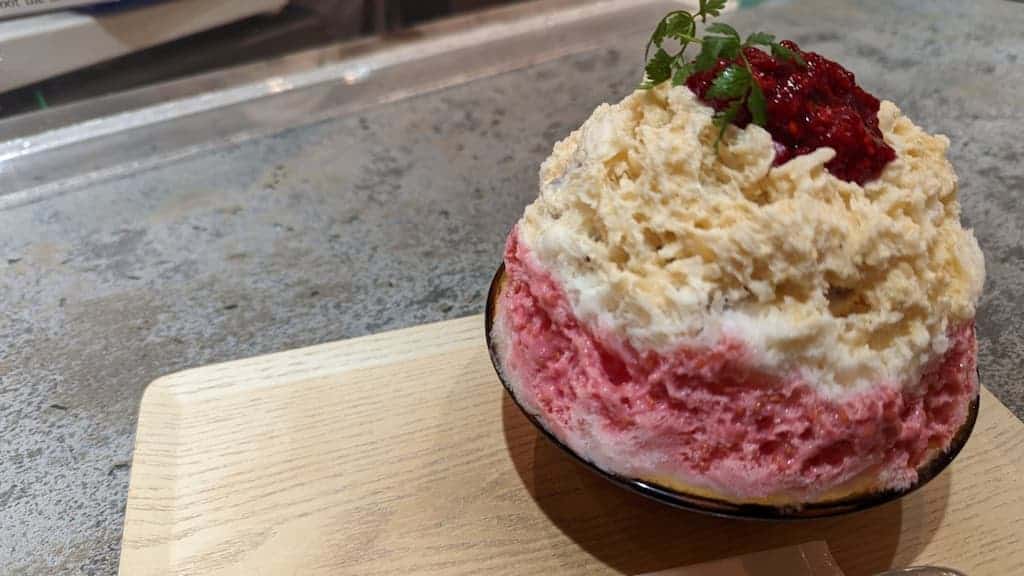 Sweet Japanese shaved ice dessert topped with fruit preserves and fresh herbs, served in a black bowl on a wooden tray.
Summer in Japan means kakigori. Mounds of finely shaved ice, topped with flavored syrup — strawberry, melon, matcha, or condensed milk. At high-end stalls, the ice is shaved so finely it almost dissolves on contact with your tongue.
At festival stalls, kakigori is the classic crowd-pleaser. Bright colors, instant refreshment, and a long queue that moves quickly. You’ll eat it faster than you expect, then feel the cold hit your forehead. Worth it entirely.
Premium kakigori cafés have elevated this simple snack to an art form in recent years. But the festival version — cheap, cheerful, and syrup-soaked — is where the real memories are made.
Regional Japanese Street Food Specialties
Japan’s street food scene shifts noticeably by region. What you find in Osaka is not what you’ll find in Fukuoka or Sendai.
Osaka is Japan’s undisputed street food capital. The city has a concept called “kuidaore” — eating yourself into ruin. Takoyaki, okonomiyaki, and kushikatsu (deep-fried skewers) define the scene. Dotonbori is ground zero for all of it.
Fukuoka is famous for its tonkotsu ramen yatai stalls along the Naka River. These open-air stalls operate late into the night and are a deeply local experience. The ramen is rich, fatty, and made with serious craft.
Kyoto leans toward tofu-based snacks, warabi mochi (bracken starch jelly), and traditional sweets sold near temple markets like Nishiki. The vibe is quieter and more refined than Osaka.
Hokkaido offers corn on the cob with butter and soy sauce, fresh crab at port markets, and jingisukan (grilled lamb barbecue). The ingredients reflect the northern climate and agricultural abundance.
Part of the joy of traveling in Japan is discovering regional variations you didn’t expect. Follow your nose. Order things you can’t identify. That’s how the best food memories happen.
Tips for Enjoying Japanese Street Food
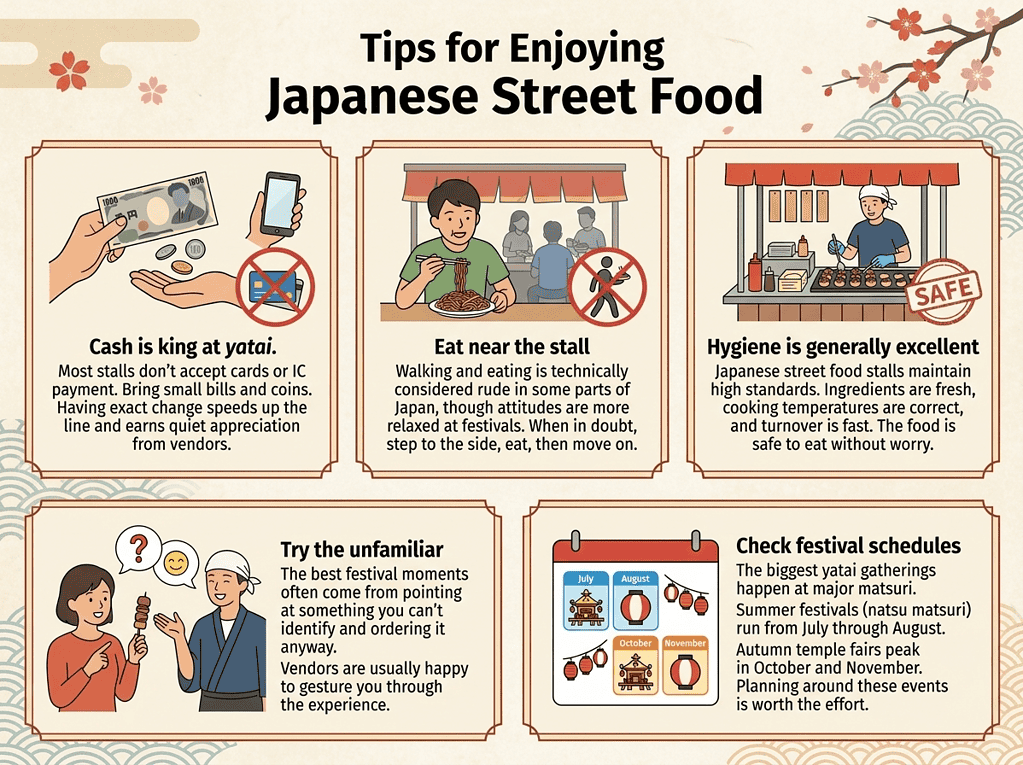 Discover popular Japanese street foods like takoyaki and taiyaki at local markets.
A few practical points can make the whole experience smoother and more enjoyable.
Cash is king at yatai. Most stalls don’t accept cards or IC payment. Bring small bills and coins. Having exact change speeds up the line and earns quiet appreciation from vendors.
Eat near the stall. Walking and eating is technically considered rude in some parts of Japan, though attitudes are more relaxed at festivals. When in doubt, step to the side, eat, then move on.
Hygiene is generally excellent. Japanese street food stalls maintain high standards. Ingredients are fresh, cooking temperatures are correct, and turnover is fast. The food is safe to eat without worry.
Try the unfamiliar. The best festival moments often come from pointing at something you can’t identify and ordering it anyway. Vendors are usually happy to gesture you through the experience.
Check festival schedules. The biggest yatai gatherings happen at major matsuri. Summer festivals (natsu matsuri) run from July through August. Autumn temple fairs peak in October and November. Planning around these events is worth the effort.
Go Hungry, Come Back Full
Japan’s street food is one of those travel experiences that’s hard to prepare for fully. The sights, sounds, and smells of a busy matsuri at night — with yatai glowing and the smell of takoyaki drifting through the crowd — are genuinely memorable.
Go with an appetite and an open mind. Try things you’ve never heard of. Talk to vendors with gestures and enthusiasm. And if you find a perfect snack, stand there and enjoy it before moving on.
Tried one of these street foods in Japan? Share your favorite memory or photo in the comments. If you’re cooking at home, start with yakisoba — it’s easier than it looks and endlessly satisfying.
Japanese Street Food FAQ
Is Japanese street food safe to eat?
Yes, Japanese street food offers a very safe dining experience. Japan maintains high food hygiene standards everywhere. Street stall vendors take freshness seriously and cook your meals directly to order. You should follow standard travel precautions — eat hot, freshly cooked items and avoid food sitting on the counter for hours.
How do I find yatai in Japan?
You can find yatai by checking local festival calendars on city tourism websites. Vendors operate year-round food stalls in Fukuoka’s Nakasu and Tenjin districts. Osaka features permanent food stalls along the Dotonbori river. You will discover the most festival-style yatai during the summer and autumn seasons. Smartphone apps like Google Maps also display current stall locations easily.
What’s the difference between okonomiyaki and monjayaki?
The main difference involves the batter thickness and regional origin. Cooks in Osaka and Hiroshima fry Okonomiyaki as a thick, savory pancake. Meanwhile, Tokyo chefs pour a thin, liquid batter to create Monjayaki, which forms a crispy yet gooey texture on the hot iron grill.
What foods are unique to Osaka’s street stalls?
Osaka vendors proudly serve Takoyaki (octopus balls) as their most iconic street food. Chefs also fry Kushikatsu, offering deep-fried skewers of meat and vegetables that diners dip into a savory communal sauce. Furthermore, locals boast deep roots in Okonomiyaki culture, frying these thick savory pancakes at stalls all over the city.
What are the most popular sweet street foods in Japan?
Vendors sell Taiyaki (fish-shaped cakes), Kakigori (shaved ice), and Dango (sweet rice dumplings) everywhere. Sweet lovers enjoy these traditional treats at festivals and busy shopping streets year-round.
How much does Japanese street food usually cost?
Street food typically costs between 300 and 800 yen per item. Prices vary slightly depending on the festival size and the specific ingredients you choose.
Is Japanese street food vegetarian or vegan friendly?
Traditional street food often contains fish broth (dashi) or meat. However, vegans and vegetarians can safely eat plain roasted sweet potatoes (Yaki-imo), candied strawberries (Ichigo Ame), and soy-glazed rice dumplings (Mitarashi Dango).
Can I walk and eat at the same time in Japan?
Japanese culture discourages walking while eating. You should stand near the food stall to finish your snack or find a designated seating area nearby. Vendors also appreciate it when you return your trash directly to their stall.
Do street food vendors accept credit cards?
Most traditional festival stalls and small street vendors only accept cash. You should carry plenty of 100-yen and 500-yen coins when exploring Japanese street food markets.
What is Taiyaki?
Taiyaki is a classic fish-shaped pastry from Japan. Bakers fill a sweet waffle-like batter with hot red bean paste or creamy custard. Food lovers know it for its crispy tail and warm, comforting center.
References
- Japan National Tourism Organization. Food & Drink. https://www.japan.travel/en/guide/food-drink/
- Osaka Convention & Tourism Bureau. Osaka Food Culture. https://osaka-info.jp/en/
- Fukuoka City. Yatai Culture in Fukuoka. https://www.yokanavi.com/en/




 English (US) ·